If you renewed Microsoft 365 this summer, your bill probably went up. Microsoft's pricing and packaging FAQ confirms that new prices took effect July 1, 2026, across Office 365 E3, Microsoft 365 E3 and E5, Business, Frontline, and standalone plans. Existing customers move to the new price list at their next renewal.
That’s the backdrop for this episode of Polaris. Chris McNulty sat down with Alex Nicklas, Chief Strategy Officer at Minburn Technology Group and a former Microsoft strategic account leader. Alex advises Native American tribes, Alaska Native and Native Hawaiian governments, and enterprise IT teams on how to buy, deploy, and govern Microsoft technology. In September, Alex and Synozur co-presented "AI Purchasing and Licensing" at TribalNet 2026 in Dallas.
Start with the outcome, not the SKU
Alex spent years at Microsoft leading one of its largest strategic accounts. He saw firsthand how a customer could hear a hundred different messages from a hundred product specialists. His advice is to reverse the order. "To relate an outcome to a product is not the right message," he says. Define the outcome you need first, then hand that to your Microsoft team and partners so they can map products to it.
He compares it to buying a car. Most of us set a budget, pick features, and only then think about how we'll use the vehicle. Alex argues that business technology purchasing has run the same backward pattern for decades. You decide on licenses and price, and only later ask what those licenses actually do. Chris has seen the same sequence play out with Copilot: organizations buy licenses, push adoption when usage looks low, and only then realize they need a governance program.
Bring AI decisions closer to the business
One of Alex's more practical points is about who defines AI use cases. Too often, the IT department sets requirements for the entire organization. Alex suggests that the people who run a function, like a finance leader who reviews documents every day, should define simple use cases with clear ROI. As he puts it, "AI is very strategic per business unit now." A narrow capability for a small team doesn't have to cost much.
The conversation also touches on forward deployed engineers. Alex remembers the field engineers who helped Microsoft's top strategic accounts succeed in the early Azure days. Today, every major AI lab is investing in the same role to connect models to real business outcomes.
Sovereignty is the first question, not the last
For tribal governments, data sovereignty comes up in nearly every conversation. Alex puts it at 90 to 100 percent of the time. "Sovereignty is a question on where that data is sitting, how is it moved, and where is it being processed," he says. Many organizations have signed subscription agreements without understanding the contract language. His advice is to negotiate the terms, ask where data will reside, and pause when you aren't sure whether you need a policy.
Chris draws a parallel to Europe. In a recent Polaris conversation, Chris O'Brien of Advania described organizations in the UK and EU weighing licensing complexity against strict data residency needs. Chris also points to Microsoft's recent work with NVIDIA on hybrid intelligence, where more AI processing can run locally on devices. Alex agrees that local processing matters. Casinos, tribal governments, and tribal hospitals all have different data requirements, and each workload should be judged on its own.
Review licenses often, and keep asking questions
Alex holds quarterly business reviews with most of his customers. He focuses on what they own today, what those licenses include, and how the AI pieces underneath keep changing. Longer contracts can still save money, he says, as long as you negotiate room for products to grow and for terms to be revisited when things change.
His last piece of advice applies to everyone. Use AI to help you figure out which questions to ask, but don't stop there. "For now and for the forever future, you always have to question what the AI is telling you," Alex says. Find trusted experts in licensing, policy, and operations, and check the answers with them.
Listen to the full episode
Alex and Chris also cover Microsoft's fall announcement cycle, why three-year contracts need room to change, and a golf story that led Alex to Whole Brain Power by Michael Lavery and Gregory Walsh. Hear the full conversation at polaris.synozur.com.
Polaris is available on Apple, Spotify, Amazon, YouTube or wherever you get your favorite podcasts. Thanks.
Show Notes
Key Takeaways
Price changes are already here. Microsoft 365 suite prices rose July 1, 2026, and new Copilot Business licenses now ship with usage-based billing on by default, with a 4,000-credit monthly ceiling that's worth about $40 per user.
Define the outcome before the product. Alex argues that matching an outcome to a product is the wrong starting point. Organizations should decide what they need, then ask Microsoft and partners to map products to it.
Most organizations buy in the wrong order. Licenses come first, then an adoption push, then governance. Reversing that sequence saves money and confusion.
AI use cases belong to the business unit. The people who run finance, operations, or gaming should define simple, high-ROI use cases instead of leaving every requirement to IT.
Sovereignty is the first question for tribal governments. Ask where data sits, how it moves, and where it's processed, and negotiate contract language to match.
Review licenses quarterly, not every three years. Products change monthly, so regular reviews and renegotiable terms protect your investment.
Use AI to find the questions, and use experts to check the answers. AI is a good starting point, but trusted human advisors are still essential.
Quotes
Alex Nicklas, Chief Strategy Officer, Minburn Technology Group
"I'm a known quantity. I tell the truth. It's very hard to say that about an AI at this point."
"You don't know what question to ask if you don't know what your outcome is going to be."
"For forty or fifty years, our purchasing model has been backwards."
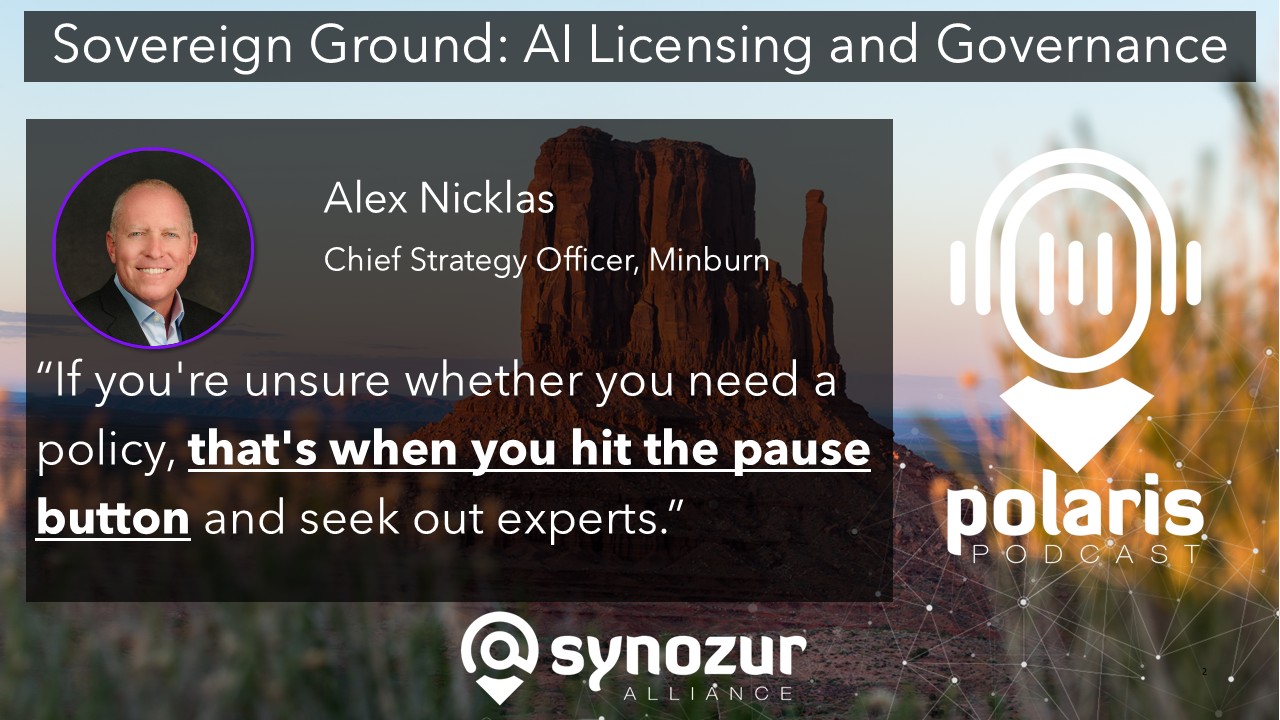
"If you're unsure whether you need a policy, that's when you hit the pause button and seek out experts."
References
Guest and company
Alex Nicklas, Chief Strategy Officer, Minburn Technology Group: LinkedIn profile
Alex Nicklas speaker profile: TribalHub
Minburn Technology Group: minburntech.com
News and licensing sources
Microsoft 365 price update effective July 1, 2026: Microsoft 365 Packaging and Pricing Updates FAQ
Commercial price tables: Microsoft 365 Pricing and Packaging Updates
Copilot pricing evolution, September 25, 2026: Evolving the Copilot pricing model and new FinOps capabilities for AI (Message Center repost)
Understanding the user subscription license (USL) and usage-based billing (UBB), Microsoft Learn - Copilot Credits Licensing Guidance,
Microsoft Usage-based billing on by default with a 4,000-credit default limit: Usage-based billing for Microsoft 365 Copilot Business, Microsoft Learn 21 list price analysis: Copilot Business Usage-Based Billing Explained, Solv Systems
Microsoft Scout, the first Autopilot, requires a GitHub Copilot license: Microsoft Licensing Update July 2026, LicenseQ
Microsoft and NVIDIA local AI and RTX Spark: Building Windows for Hybrid Intelligence, Microsoft Source, and NVIDIA, Microsoft Kick Off a New Beginning for Windows PCs, NVIDIA Blog
Forward deployed engineers: Building the system for AI at work, Jared Spataro, Microsoft Copilot Blog
Organizations, people, and stories mentioned
TribalNet 2026, "AI Purchasing and Licensing: What to Consider in Agreements and Operations," September 21, 2026: TribalNet agenda
Tribal-ISAC: tribalisac.org
AIIM, the Association for Intelligent Information Management: aiim.org
Culture pick
Whole Brain Power: The Fountain of Youth for the Mind and Body by Michael Lavery and Gregory Walsh
Events
TechCon 365 Dallas | November 2-6 (Irving TX) www.techcon365.com
TribalNet 2026 AI Roundtable | November 4 (Online) | synozur.com/events/getting-ai-right-in-tribal-organizations
Project Copley Community Call | November 9 (Online) synozur.com/events/project-copley-community-call-02
Minnesota Microsoft 365 User Group Fall Workshop Day | Nov 13 (Microsoft Innovation Hub, Edina, MN) mn365.org
Microsoft Ignite — November 17-20 (San Francisco, CA) ignite.microsoft.com
ESPC26 | November 30-December 3 ( Amsterdam ) espc.tech/conference/espc-2026/ (save €300 with code POLARIS)
Production
Polaris is produced with help from Riverside.fm. Our theme song, “Alternative Dream” is provided courtesy of Adobe. Additional music and sound provided by IndieGuy Records. Graphic design by Josh Brantley.
Chapters
00:00 Introduction and Personal Background
02:59 Navigating Complexity in AI and Licensing
05:58 Understanding Microsoft’s Messaging and Customer Needs
08:52 The Challenges of Licensing and Governance
12:06 Defining Business Outcomes for Success
14:54 Creating a Vision for Organizational Success
18:12 Leveraging External Expertise for Growth
21:03 Adoption Challenges in AI and Technology
24:11 Engaging with Tribal Organizations on AI Licensing
27:25 Data Sovereignty and Tribal Governance
30:18 Navigating AI and Licensing Challenges
34:15 Understanding Licensing for AI Implementation
36:38 Long-Term Contracts and Future-Proofing
40:02 Staying Relevant Amid Rapid Changes
43:30 Local Processing and Sovereignty Concerns
46:59 Personal Growth and Learning Beyond Tech