In the latest episode of Polars, we begin by separating terms that often get blurred. Sovereignty is the baseline: federally recognized tribal nations are sovereign governments with a nation-to-nation relationship with the United States, their own laws, elections, and institutions. Data sovereignty is a nation's authority over data about its citizens, lands, and culture, no matter who is holding it. Digital sovereignty extends that authority to the systems the data lives in — the network, the cloud, and the model.
Get those three straight and most of the rest of the conversation follows.
What working with tribes actually requires
Bill Barkovic recently joined Business Operational Concepts as VP of Sales after more than fourteen years at Microsoft, and he has worked with tribal entities for over a decade. His first lesson came from a colleague: do not be surprised if they don't respond to you for the first year. They are deciding whether you will stick around.
"They're phenomenal customers, they're partners, and they're friends," Bill says. He describes evening calls that are just check-ins, and a tribal council that asked where his son was when he showed up to a second meeting without him.
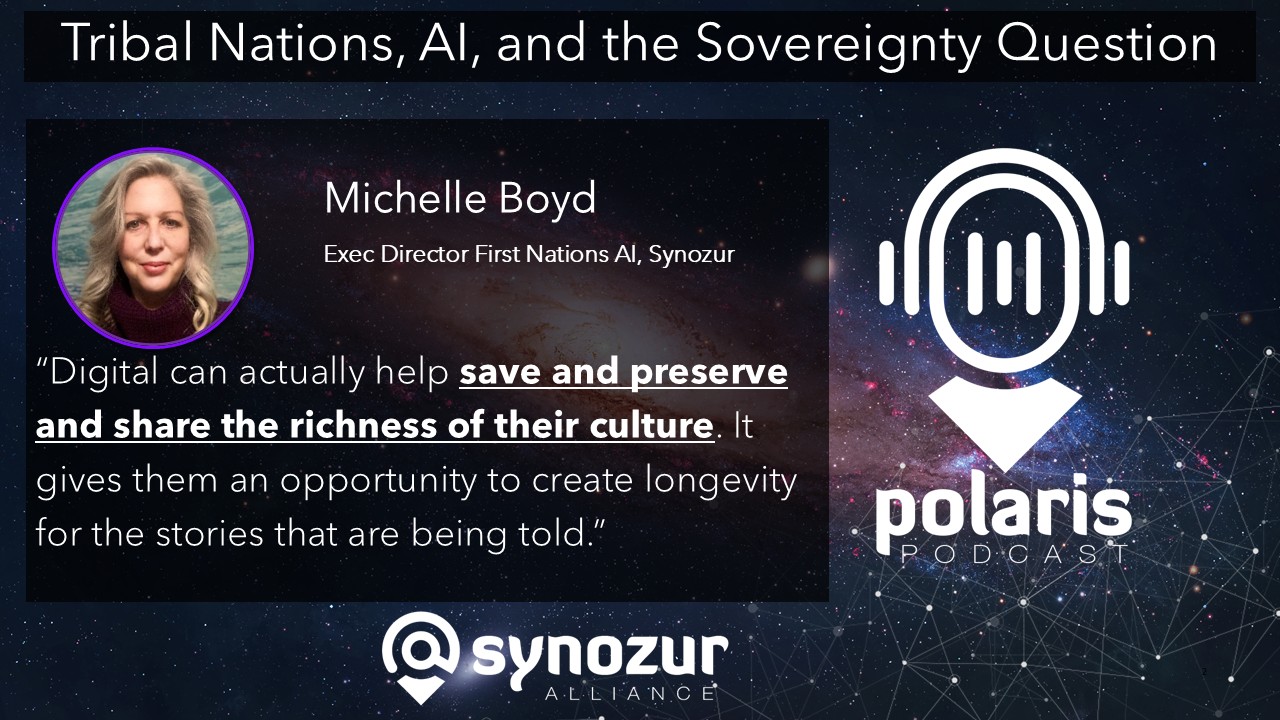
Michelle Boyd, Executive Director of First Nations AI and Digital Futures at Synozur, adds the cultural frame. Growing up steeped in powwow culture, she watched tribes treat technology as a threat to language, stories, and knowledge. That has shifted. "Digital can actually help save and preserve and share the richness of their culture," she says. "That's a very tribal mindset — to take things that are risks or issues or threats and turn them into a power."
Sovereignty gated the cloud. Now it gates AI.
When Bill started, fewer than 40 tribal tenants were in the cloud, and there was real apprehension about whether data could live there and remain sovereign. It took roughly eighteen months of work inside Microsoft to answer that question. Once answered, the gates opened.
The same pattern is repeating with AI: curiosity alongside genuine concern. Some tribes are still working through acceptable-use policies. Others are running GitHub Copilot across 200-plus contractors during project ramp-ups, building agents in Agent Builder and Power Platform, and learning token economics the hard way. Cost discipline is not abstract here — an overspend means a tribal council has to move money that was meant for citizen services.
There is also a regulatory layer most organizations never encounter. Between the National Indian Gaming Commission, state gaming commissions, and federal rules, some data simply cannot leave a given state, and some cannot leave tribal premises at all.
Why the land is a technology question
Ask Bill how to approach a tribal client respectfully and his answer is short: ask questions and listen. Ditch what you know and resist jumping to the first answer.
That matters most with data centers. Water consumption, power draw, and land acquisition come up regularly, because the land is part of the culture — not an ESG footnote. Both guests credit Microsoft for rethinking data center design and cooling. As Michelle puts it, is it perfect? No. But they are willing to have the conversation, and that is appreciated.
The stakes on language
The United Nations estimates that one indigenous language dies every two weeks. Northern Cheyenne AI researcher Michael Running Wolf argues AI should scale teaching rather than replace teachers — and warns that universities already hold much of this heritage, collected for dissertations and retained as institutional property.
The risk is not theoretical. In the 2019 ransomware attack on the Eastern Band of Cherokee Indians, 911 dispatch went down and fifteen years of recordings of tribal members speaking Cherokee were permanently lost. The tribe has roughly 160 fluent speakers remaining.
What's next
Bill and Michelle will both be at TribalNet 2026, September 20–24 at the Hilton Anatole in Dallas — the 27th annual conference, with eight tracks spanning AI, cybersecurity, gaming, health, and government services. Thursday brings a make-a-thon, where attendees build agents alongside their own end users. The goal: twenty or more new AI agents shared out so other tribes can adapt them.
Hear the full conversation at polaris.synozur.com.
Polaris is available on Apple, Spotify, Amazon, YouTube or wherever you get your favorite podcasts. Thanks.
Show Notes
Takeaways
Three terms, three different things. Sovereignty is a nation-to-nation relationship with the US. Data sovereignty is a nation's authority over data about its citizens, lands, and culture — no matter who holds it. Digital sovereignty extends that authority to the systems the data lives in: the network, the cloud, and the model.
The policy conversation has moved down the stack. Cherokee Nation signed its first AI policy last year; in February 2026 it turned to data centers, land, and environment. Arizona's health department adopted what is believed to be the first state-level Indigenous data sovereignty policy in the country, covering all 22 federally recognized tribes in the state.
Relationships come before requirements. Bill was told not to expect a response from tribal clients for the first year — they are deciding whether you will stick around. That patience is the entry fee, and it changes how technology work gets scoped and delivered.
Sovereignty was the gate to the cloud, and it is now the gate to AI. Fewer than 40 tribal tenants were in the cloud when Bill started; roughly 18 months of work on the sovereignty question opened the gates. The same pattern is repeating with AI — curiosity paired with real concern.
Tribal AI adoption ranges widely. Some tribes are still finalizing acceptable-use policies. Others are running GitHub Copilot at scale, building agents in Agent Builder and Power Platform, and learning token economics firsthand.
The use cases are governmental, not just commercial. AI as a switchboard in Teams so citizens can request forms without driving in. Clinical support as tribes take health services back from IHS. Cultural and language preservation as elders and fluent speakers grow fewer.
Land is a technology issue. Data center water use, power, and land acquisition come up in nearly every AI conversation with tribes — and they are a cultural concern, not just an ESG line item.
Talent pipelines are fragile. When a trained tribal employee is recruited away, it can set the whole organization back. Building depth behind each role matters as much as filling it.
Sound Bites
Bill Barkovic — VP of Sales, Business Operational Concepts
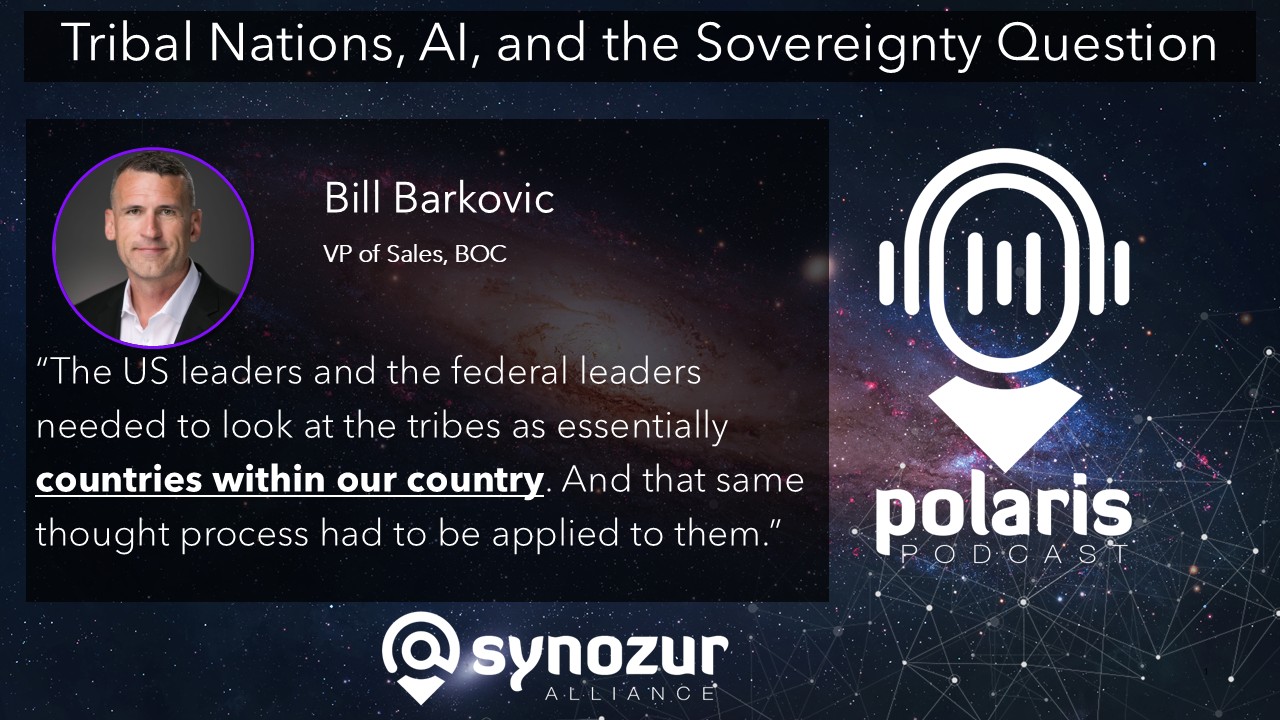
"The US leaders and the federal leaders needed to look at the tribes as essentially countries within our country. And that same thought process had to be applied to them."
"Yes, this is a casino and they're generating large volumes of money, but 75 to 80 percent of that money gets redirected to the government to take care of their people."
"It's really asking questions and listening — ditching what you know in your technology background and wanting to jump to the first answer, and actually listening to what they're trying to tell you."
"There's a slow progression towards AI. There's a lot of curiosity, but there's also a lot of concern around data sovereignty."
Michelle Boyd — Executive Director, First Nations AI and Digital Futures, Synozur
"As I was growing up, what I saw was always a resistance to technology from the tribes. It was seen as something that could degrade culture, language, stories, knowledge, and that preservation."
"Digital can actually help save and preserve and share the richness of their culture. It gives them an opportunity to create longevity for the stories that are being told."
"That's a very tribal mindset — to take things that are risks or issues or threats and turn them into a power."
References
Guests
Bill Barkovic LinkedIn
Bill Barkovic speaker profile: TribalHub.
Business Operational Concepts (BOC, LLC). boc.us.com · Tribal enterprise services · LinkedIn
Michelle Boyd
Michelle Boyd team profile · Welcoming Michelle Boyd as Executive Director, First Nations AI & Digital Futures · Michelle Boyd on LinkedIn · TribalHub speaker profile
News & Industry
Cherokee Nation data center task force. Principal Chief Chuck Hoskin Jr. signed Executive Order 2026-02-CTH, creating the Principal Chief's Task Force to Study the Impact of Data Centers on the Economy and Natural Environment of the Cherokee Nation Reservation. Coverage: The Journal Record. Task force page: Cherokee Nation.
Arizona Indigenous data sovereignty policy. ADHS and Tribal Nations Advance Indigenous Data Sovereignty Policy, effective April 1, 2026, covering all 22 federally recognized tribes in Arizona. Policy text: Arizona Department of Health Services. Analysis: Native Nations Institute and KJZZ.
Indigenous language loss. The United Nations estimates that one indigenous language dies every two weeks — UN DESA backgrounder on Indigenous Languages and OHCHR.
Michael Running Wolf and First Languages AI Reality. Northern Cheyenne AI researcher and former Amazon Alexa developer, co-founder of the First Languages AI Reality initiative. Biography · First Languages AI Reality at Mila · "Why First Languages AI Can Be a Reality" (TEDx) · LinkedIn.
Eastern Band of Cherokee Indians ransomware attack. The December 2019 Sodinokibi attack that took down tribal systems including 911 dispatch and destroyed 15 years of Cherokee-language audio and video recordings. Microsoft Source feature · Asheville Citizen-Times · "Anatomy of a Ransomware Attack," EBCI Office of Information Technology.
Pop Culture
Project Hail Mary, the Ryan Gosling film adapted from the Andy Weir novel
Lioness, season three, on Paramount+
Events
TribalNet 2026 | September 20-24 (Dallas, TX) TribalNet Conference
North American Collaboration Summit | October 4-6 (Branson, MO) collabsummit.org
CollabDays New England | October 16 (Burlington, MA) collabdaysne.org
Microsoft Ignite — November 17-20 (San Francisco, CA) ignite.microsoft.com
ESPC26 | November 30-December 3 ( Amsrterdam ) espc.tech/conference/espc-2026/
Production
Polaris is produced with help from Riverside.fm. Our theme song, “Alternative Dream” is provided courtesy of Adobe. Additional music and sound provided by IndieGuy Records. Graphic design by Josh Brantley.
Polaris is available on Apple, Spotify, Amazon, YouTube or wherever you get your favorite podcasts. Thanks.
Chapters
00:00 Introduction to AI in Tribal Communities
02:05 Understanding Sovereignty, Data, and Digital Sovereignty
04:10 Policy Developments and Data Center Impact
06:50 Language Preservation and Data Ownership
10:02 Building Relationships with Tribal Nations
12:51 Culture, Communication, and Technology
14:12 Data Sovereignty and Tribal Perspectives
15:47 Microsoft's Role and Tribal Perceptions
18:03 Local Processing and AI Opportunities
20:09 AI in Citizen Services and Healthcare
23:01 Tribal AI Adoption and Success Stories
27:14 Balancing Technology and Cultural Values
31:04 Future Opportunities and Tribal Engagement
33:55 Success Stories and Community Impact
36:57 Pop Culture and Personal Insights
38:58 Upcoming Events and Conferences
42:03 Closing Remarks and Next Steps