Anthropic's Claude AI is now officially a Microsoft data processor, which means it operates inside Microsoft 365's security and compliance framework starting January 7, 2026.
The Big Picture: Two Worlds Coming Together
Think of this announcement as two powerful streams converging into one:
Stream 1: Your organization already uses Microsoft 365—Outlook, Teams, SharePoint, Word, Excel, PowerPoint. Your data lives in this ecosystem with all the security, compliance, and contracts you've already negotiated.
Stream 2: You or your teams might already use Claude.ai for complex analysis, research, writing, or coding. It's become known as one of the best AI models for deep reasoning and sustained work, and industry reviews consistently rate Claude Sonnet among the world's best coding models.
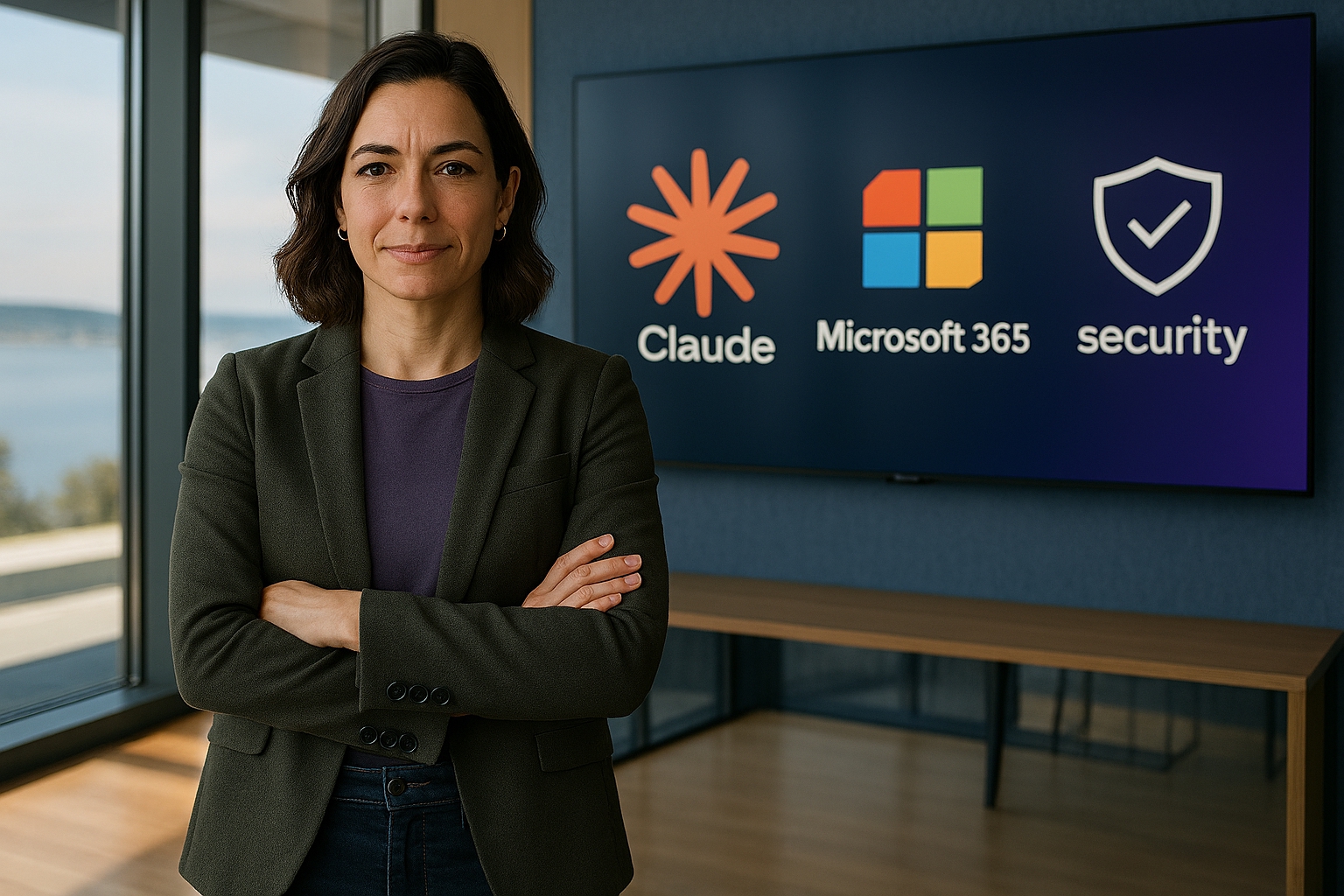
Until now, these were separate worlds with separate contracts, separate security reviews, and separate data handling policies. Starting January 7, 2026, they merge. Claude will operate under Microsoft's umbrella with the same data protection commitments that govern all your M365 data.
What This Means If You're a Microsoft 365 User
You Get Access to World-Class AI Without the Procurement Headache
Here's what typically happens when you want to add new AI capabilities: weeks or months of vendor reviews, legal negotiations, security assessments, separate billing systems, and executive approvals. That procurement overhead often kills innovation before it starts.
Now, Claude becomes available through your existing Microsoft relationship:
No separate vendor contract needed with Anthropic
Covered by Microsoft's Data Protection Addendum you already have
Eligible for your Azure spending commitments (MACC)
Protected under Microsoft's Customer Copyright Commitment—meaning Microsoft will defend you if someone claims Claude's output infringes their copyright
You Get the Right AI for the Right Job
Microsoft isn't replacing their existing AI models - they're giving you options. Claude excels at specific things:
Complex reasoning and analysis where sustained focus matters
Coding tasks (Claude Sonnet 3.5 is currently among the world's best coding models)
Building sophisticated AI agents that can handle multi-step workflows
Long-form research and synthesis where you need to maintain context over extended interactions
You'll see Claude available in:
Microsoft 365 Copilot's Researcher agent for deep research tasks
Copilot Studio for building custom agents
Excel Agent Mode for complex spreadsheet work, formula generation, and data analysis
Word, Excel, and PowerPoint agents for document creation and editing
The system can intelligently route tasks to the model that handles them best. Need quick content generation? One model. Need deep analysis of a complex regulatory document? Claude steps in.
What This Means If You're Already Using Claude
Your Enterprise Data Now Stays in the M365 Security Boundary
If your teams currently use Claude.ai, they're likely copying data out of your Microsoft environment, pasting it into Claude's website, and then bringing results back. Each of those transfers is a potential security and compliance gap.
Now, when Claude operates inside Microsoft 365:
Data doesn't leave your M365 tenant's security perimeter
Your existing data loss prevention policies apply
Your compliance frameworks remain intact
Audit logs capture usage
Admin controls let you govern who uses what
You Can Finally Integrate AI Work into Your Productivity Flow
Instead of switching between browser tabs and copy-pasting:
Claude can work directly with your SharePoint documents
It can access your Outlook emails and calendar
It integrates with Teams conversations
Results stay in your document workflow
This isn't just about convenience—it's about maintaining data integrity and reducing the security risks that come from context-switching between platforms.
The Security Story
Let's address what "trust boundary" actually means without the jargon.
Before: When you used Claude directly from Anthropic, your data went to Anthropic's systems under Anthropic's terms. If you're a regulated business (financial services, healthcare, government contractors), this required separate due diligence, separate data processing agreements, and separate risk assessments.
After: Anthropic becomes what Microsoft calls a "subprocessor"—think of it like a carefully supervised subcontractor. Microsoft maintains oversight through contractual safeguards, and Anthropic operates under the same enterprise-grade commitments that cover all Microsoft 365 services:
https://learn.microsoft.com/en-us/copilot/microsoft-365/microsoft-365-copilot-privacy apply
The Microsoft Customer Copyright Commitment covers AI-generated content
Translation: Your legal and compliance teams don't need to create a new relationship—it flows through your existing Microsoft agreement.
The Important Asterisks (Read These)
Data Residency Limitations
Here's where you need to pay attention: Claude is not currently included in Microsoft's EU Data Boundary or in-country processing commitments.
What this means:
If you're in the EU, EFTA, or UK: Claude will be turned OFF by default. You'll need to consciously opt in if you want to use it.
If you're everywhere else in commercial cloud: Claude will be turned ON by default starting January 7, 2026. You can opt out if needed.
If you're in government cloud (GCC, GCC High, DoD) or sovereign clouds: Claude is not available yet—there's no FedRAMP certification in place.
Action item: If you have strict data residency requirements (common in financial services, healthcare, or public sector), review whether Claude's processing meets your compliance obligations. Your Microsoft 365 admin center will have a toggle to control this.
The Model Selection Question
This announcement signals Microsoft's commitment to a multi-model strategy—no single AI provider will handle everything.
This creates a strategic decision point: Do you embrace this multi-model future where different AIs handle different tasks, or do you maintain tighter control by limiting which models process your data?
Highly regulated organizations might choose to be more selective. Organizations prioritizing innovation might embrace the full range. There's no universal right answer—it depends on your risk tolerance and regulatory environment.
What You Should Do Now
For IT:
Check your admin center starting December 8, 2025 — a new toggle for "Anthropic as a Microsoft subprocessor" will appear
Review your data residency obligations—especially if you operate in EU/EFTA/UK or highly regulated industries
Plan your governance approach—decide whether Claude will be on or off by default, and for which users
Communicate the change to your users before January 7, 2026
Update your AI acceptable use policies to reflect multi-model availability
For Business:
Understand the strategic shift: Microsoft is moving from a single-AI-provider model to intelligently orchestrating multiple AI models for different tasks
Evaluate the opportunity: Claude's strengths in reasoning, coding, and complex analysis could unlock new capabilities your teams need
Consider the implications: Multi-model AI is becoming the enterprise standard—this is a preview of how AI will work across all enterprise software
Assess your readiness: Are your governance frameworks flexible enough to manage multiple AI providers under one umbrella?
The Anthropic-Microsoft partnership represents a significant evolution in how enterprise AI works. Instead of forcing you to choose one AI provider and live with its limitations, Microsoft is building an orchestration layer that intelligently routes work to the best model for each task—all within a single security and compliance framework.
For Microsoft 365 users, this means access to world-class AI capabilities without procurement friction.
For existing Claude users, it means bringing that powerful analysis capability inside your enterprise security boundary.
The catch is that it requires active governance. The January 7 default enablement isn't just a technical switch—it's a decision point about how your organization will embrace the multi-model AI era.
The organizations that win with AI won't be the ones with the single "best" model—they'll be the ones that effectively orchestrate multiple specialized capabilities while maintaining security, compliance, and control.
This announcement is Microsoft's bet on that future. The question is whether your organization is ready to govern it effectively.
Further Reading: